
🏃♂️ What if speed wasn’t just talent — but data-driven precision?
In competitive sprinting, milliseconds determine performance. While raw athletic ability matters, acceleration and sprint efficiency can be scientifically optimized. This project explores Sprint Technique Analysis using Machine Learning, focusing on how biomechanical and performance variables impact acceleration up to 30 meters.
By combining sports science, biomechanics, and data analytics, this analysis transforms motion into measurable insights — and insights into real-world improvement.
📊 Project Overview
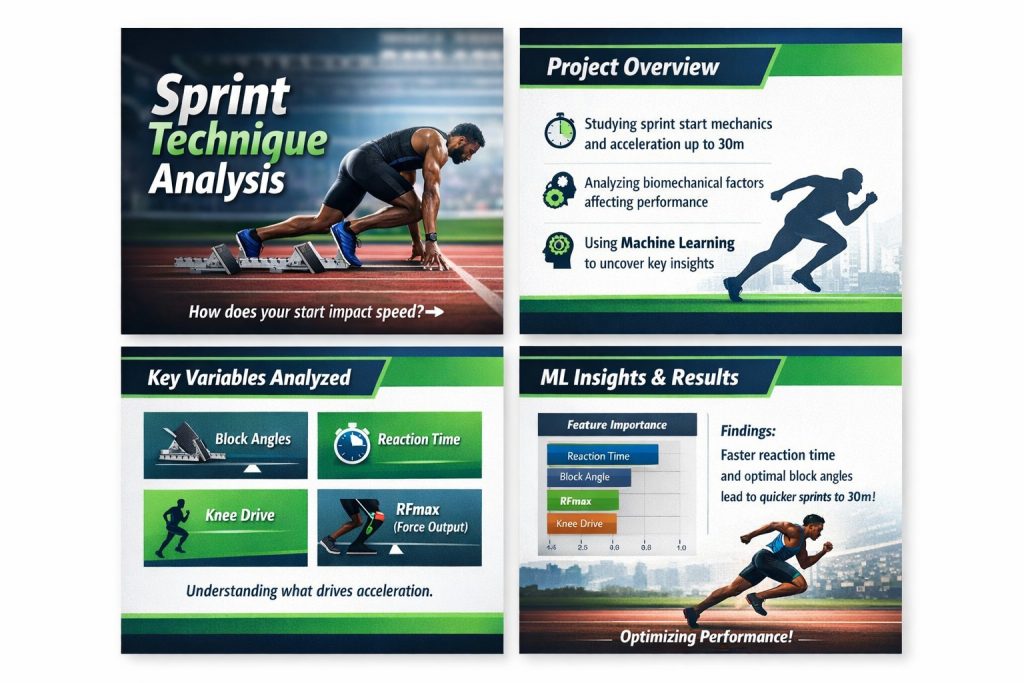
This project investigates sprint start mechanics and early acceleration performance by analyzing:
- Reaction Time
- Front & Rear Block Angles
- Knee Drive Angles
- RFmax (Force Output)
- Total Body Center of Gravity (TBCG)
- Time to 30 meters
Using Machine Learning models, we evaluated how each variable contributes to sprint performance and acceleration efficiency.
🔍 Key Findings from the Data
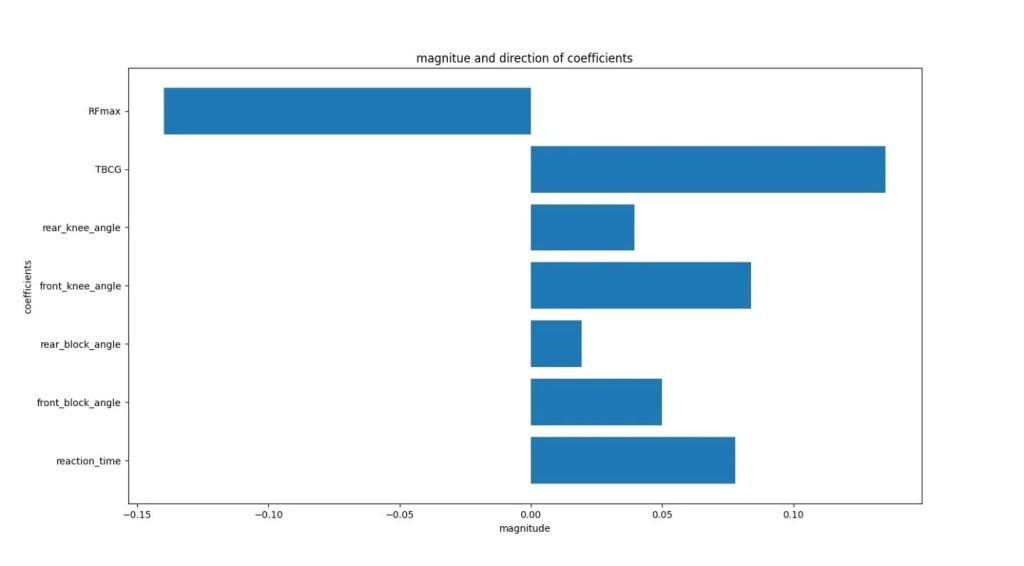
Through feature importance analysis and regression modeling, several critical insights emerged:
✅ Reaction Time Matters
Faster reaction time significantly reduces sprint time to 30 meters, emphasizing explosive start mechanics.
✅ Optimal Block Angles Improve Acceleration
Front and rear block angles directly influence force transfer during the start phase. Proper positioning enables better propulsion and faster acceleration.

✅ RFmax (Force Output) is a Strong Predictor
Higher relative force output contributes to improved acceleration efficiency.
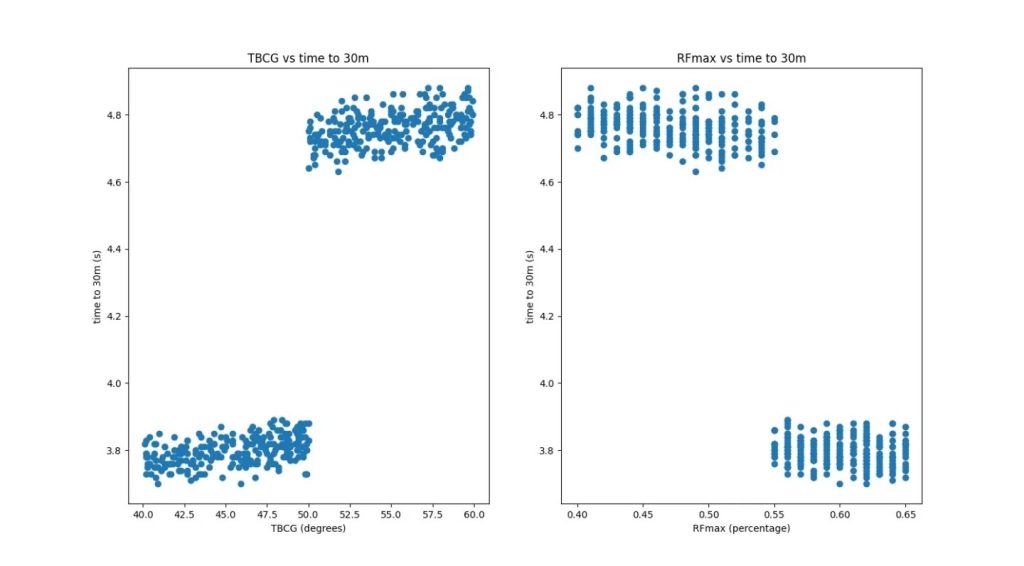
✅ Biomechanical Alignment Drives Performance
Variables like knee angles and center of gravity positioning impact stride mechanics and acceleration dynamics.
🤖 Where Machine Learning Comes In
Machine Learning models were used to:
- Identify the most influential sprint variables
- Quantify the magnitude and direction of biomechanical impact
- Predict 30m sprint time based on input features
- Provide actionable, data-backed performance recommendations
Instead of relying solely on intuition, this approach allows performance optimization through measurable, predictive insights.
💡 Why This Matters
This is where Data Science meets Human Performance.
Athletes and coaches can use data-driven insights to:
- Start faster
- Accelerate smarter
- Optimize technique scientifically
- Reduce performance variability
Faster starts aren’t accidental.
They’re engineered with data.
🚀 Applications of This Approach
The methodology behind this project can be applied to:
- Sports Analytics & Performance Tracking
- AI-Driven Biomechanical Analysis
- Motion Tracking Systems
- Athlete Monitoring Platforms
- Predictive Performance Modeling
This demonstrates how Machine Learning in Sports Analytics can create competitive advantages through intelligent data interpretation.
📩 Let’s Collaborate
Curious how Machine Learning can transform performance analysis, biomechanics research, or sports analytics projects?
Feel free to reach out — I’m always open to discussing data-driven solutions and innovative applications of AI in sports.
Visit: https://umairsarchive.com